IMC, CORP.
025-105-249A VW Vanagon Syncro Front Crankshaft Pulley Seal - 1.9L & 2.1L
025-105-249A VW Vanagon Syncro Front Crankshaft Pulley Seal - 1.9L & 2.1L
Couldn't load pickup availability
Front Crankshaft Pulley Seal (Syncro) – 025-105-249A
The 025-105-249A is an essential component for the 1900cc and 2100cc Waterboxer engines equipped with the Syncro 4WD system. Because Syncro Vanagons are often pushed harder in varied terrain, the crankshaft seals are subjected to significant thermal and mechanical stress. This seal features a high-grade elastomer construction with an internal tension spring to ensure the sealing lip remains perfectly seated against the rotating crankshaft.
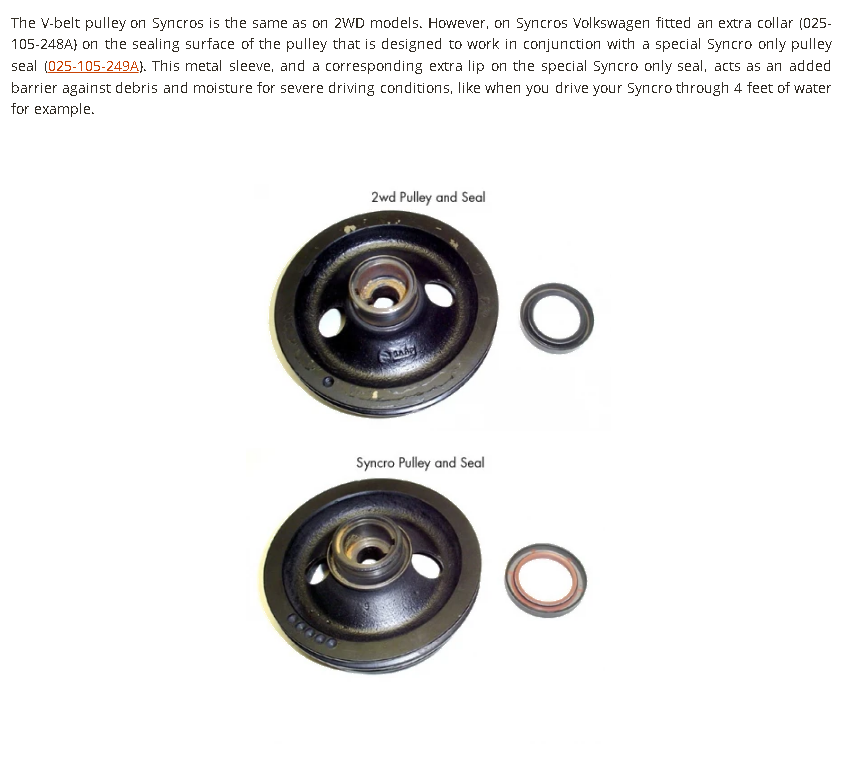
If you notice oil misting on your vibration damper or oil spots appearing directly under the pulley at the very back of the van, it is likely time to replace this seal. Using the Syncro-specific "249A" suffix ensures you have the correct depth and diameter for the 4WD pulley assembly.
Detailed Vehicle Compatibility
VW Vanagon Syncro (4WD Water-Cooled):
- 1986, 1987, 1988, 1989, 1990, 1991
Product Highlights & Features
-
Heavy-Duty Construction: Built to withstand the higher operating temperatures and vibration levels associated with 4WD engine loads.
-
Precision Tensioner: Includes a garter spring that provides 360-degree uniform pressure to compensate for minor crankshaft runout.
-
OEM Material Quality: Resistant to chemical degradation from both synthetic and conventional engine oils.
Technical Specifications
-
Part Number: 025-105-249A
-
Engine Type: 1.9L & 2.1L Waterboxxer (Syncro)
-
Location: Front (Pulley Side)
-
Application: 4WD (Syncro) Models Only
Installation & Maintenance Tips
-
Verify the Pulley: When removing the pulley on a Syncro, inspect the sealing surface for any grooving or pitting. Because these vans are often used in dusty environments, grit can get trapped and score the metal. A smooth surface is mandatory for the new seal.
-
Installation Lubrication: Apply a light film of fresh engine oil to the inner diameter of the seal before installation. This prevents "dry-start" friction which can melt the sealing lip within seconds of the engine firing.
-
Depth Calibration: Ensure the seal is driven in straight and to the factory-specified depth. Using a proper seal driver tool will prevent the seal from being cocked in the bore, which is the most common cause of immediate leaks following a replacement.
528.170
528170
025105249A
Share